LIVES · BEAUTY AND THE MIND · IDEAS
From Psychiatry’s Mid-Century Promise to Its Social Expansion
How psychiatry moved beyond the clinic and into everyday social life.
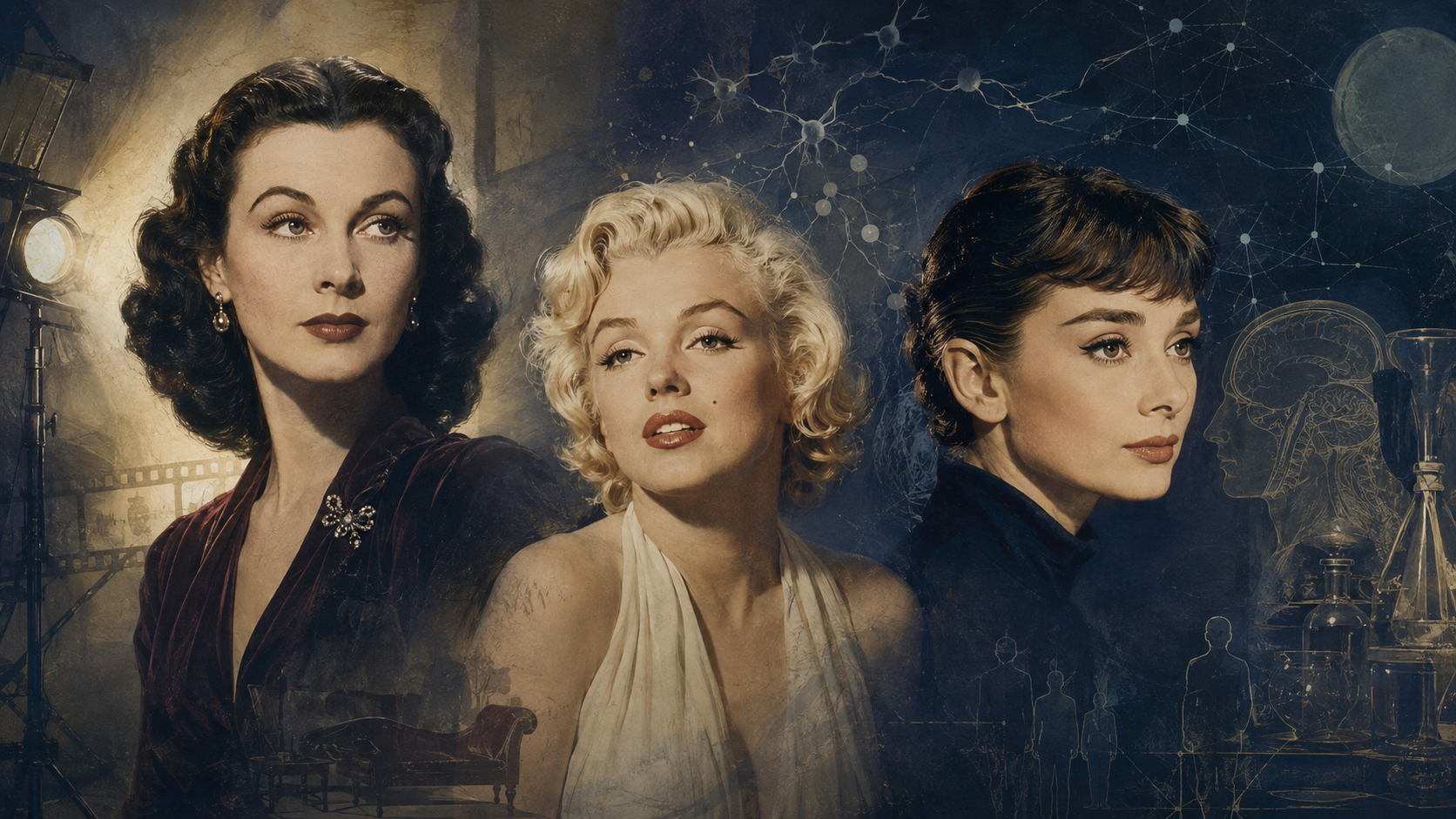
Hollywood’s golden age coincided with psychiatry’s own mid-century period of extraordinary confidence and expansion. The lives of Leigh, Monroe, and Hepburn unfolded where these two ascendant cultural forces met.
Two ascendant cultural forces
As cinema created some of the twentieth century’s most visible ideals of beauty, psychiatry was acquiring new authority to interpret, diagnose, measure, and intervene in the human mind. The experiences of Leigh, Monroe, and Hepburn reveal not only three individual life trajectories, but also the growing presence of psychiatry within the world behind Hollywood’s most celebrated images.
Concepts That Entered Everyday Life
Psychiatric concepts are now everywhere—in hospitals, schools, workplaces, families, and social media. Depression, anxiety, trauma, bipolar disorder, therapy, and medication have become part of everyday understanding. This wider reach represents genuine progress: more people can recognize suffering, speak about it, and find pathways to care without the silence and stigma surrounding earlier generations.
Beyond the clinic
This expansion has involved more than the spread of diagnosis and treatment. Psychiatry’s boundaries with psychology, neuroscience, physiology, genetics, pharmacology, and behavioural science have become progressively less distinct. Its scope now extends far beyond science and medicine, intersecting with sociology, education, ethics, family life, workplace and organizational management, digital environments, and broader social structures.
The next promise
More than seventy years have passed since Hollywood’s golden age converged with psychiatry’s mid-century promise. Psychiatry’s future requires more than continued scientific progress and increasingly refined treatments. It also requires wider public understanding of mental and systemic health, together with sustained attention and cooperation across clinical services, families, schools, workplaces, communities, and society as a whole.
Interpretive note. This essay draws on publicly documented sources and offers historical and psychological interpretation, not retrospective clinical diagnosis.