LIVES · WEST & EAST · 02
System Constraint:
The Reality Faced by a Complex Life System
Su Shi’s celebrated equanimity may not have been the starting point of his personality. It may be better understood as a life pattern formed through repeated constraint, long adaptation, and the redirection of creative energy.
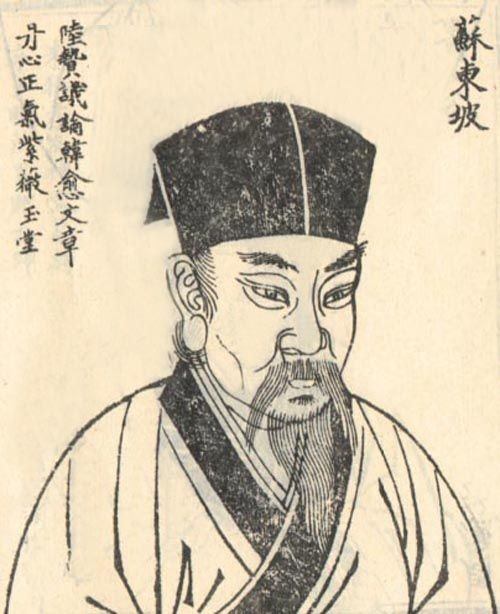
Su Shi (1037–1101) was one of the most representative cultural figures in Chinese history: a defining literary voice of the Northern Song, a thinker, statesman, artist, and celebrated observer of food and everyday life. Later generations often approach him through his poetry, calligraphy, painting, or political career and eventually summarize his character with one word: kuangda—broad-mindedness, equanimity, or an expansive freedom of spirit. Yet when we return him to the circumstances in which he actually lived, that quality begins to look less like an inborn starting point than the outcome of a life shaped by multiple constraints and sustained adaptation.
Information can be transmitted. Meaning must be generated.
01
A spiritual world shaped by Buddhism and Daoism
Su Shi’s experiences and friendships make it tempting to describe his religious orientation primarily as Buddhist. Yet careful reading of his words, especially when we enter the living situations evoked by his writing, reveals something more blended. The spaciousness of his inner world also carries a powerful Daoist impulse: a desire to return to nature, to move with Heaven and Earth, and to place the finite human life within a larger order.
小舟從此逝,江海寄餘生。
Let this small boat depart from here;
I shall entrust the rest of my life to rivers and seas.
There is no fervour here to save the world, and no insistence upon achievement or official recognition. The lines move instead towards a Daoist act of relocation: a limited life is placed again within the immeasurable world of rivers, seas, and mountains.
休言萬事轉頭空,未轉頭時皆夢。
Do not say that all things become empty when one turns away;
before the turning, they are already dreams.
Here the emphasis falls upon impermanence and transformation, recalling the world of Zhuangzi and the dream of the butterfly. Elsewhere, in the famous line 「歸去,也無風雨也無晴」—“I turn homeward: there is neither wind and rain nor clear sky”—Su Shi also approaches the Buddhist spaciousness expressed in 「本來無一物,何處惹塵埃」: “Originally there is not a single thing; where could dust alight?”
In the work of this writer who lived nearly a thousand years ago, we therefore encounter more than political ambition and personal success or failure. We encounter sustained reflection on life, nature, and existence. For Su Shi, Buddhism and Daoism may not have been competing systems. Interwoven within his inner life, they seem to have supported a distinctive harmony of character:
Buddhist impermanence and Daoist naturalness.
Buddhist transcendence and Daoist non-contention.
The historical question is therefore not simply whether Su Shi was “Buddhist” or “Daoist.” It is what kinds of experience, environment, and social structure together shaped this spiritual world. Once we place him back inside his own historical situation, how should we understand the trajectory and meaning of his life?
02
System constraints in Su Shi’s life
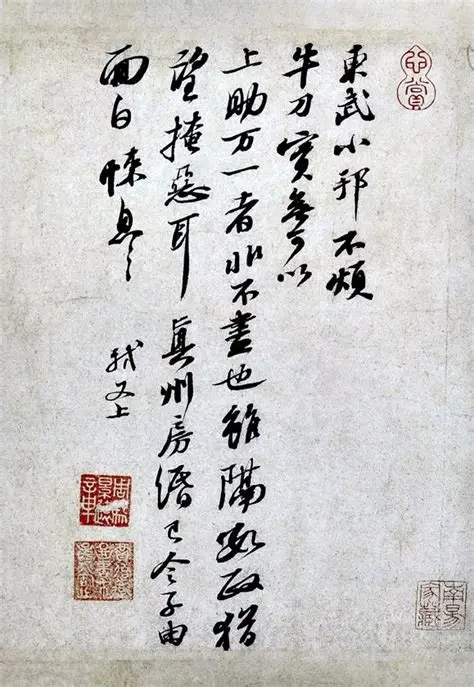
Every life must confront constraints arising from family, society, institutions, and history. Because Su Shi’s words so often display humour and spaciousness, it is easy to regard him as naturally carefree. This reading can obscure the emotional complexity that also appears in his writing, together with persistent traces of frustration, sorrow, and regret. The constraints he faced did not arise from one event. They were produced by several systems acting together.
The Su family belonged to a deep literati tradition. Within such a family, study, entry into public office, and participation in state governance were more than occupational choices; they formed a structure of responsibility. From this perspective, Su Shi initially appeared fortunate. He lived through one of the Northern Song’s strongest periods. Unlike officials and generals who lamented that they had been born into disorder, he seemed to possess a wide political and cultural stage. Yet the very structure of that age contained tensions that would sharply limit his path.
The political divisions of the Northern Song are often described as a conflict between reform and opposition to reform. At a deeper level, however, they also reflected a recurring tension in Chinese governance: on one side, a tradition of rule centred upon literati ideals and moral administration; on the other, increasingly powerful social and economic forces emerging with commercial development, together with stronger attempts by the state to organize them.
Within Su Shi’s political world, Wang Anshi sought to use institutions and state power more actively in social and economic life. Measures such as the Green Sprouts Law, the Market Exchange Law, and the Equitable Transport Law expressed an effort to reorganize agricultural and commercial resources through government mechanisms. Figures associated with an older literati mode of governance, including Ouyang Xiu, were more inclined to protect established administrative traditions and a greater degree of space for society’s own operation. The historical reality was more complex than a simple two-sided division, but this tension shaped the field through which Su Shi had to move.
Su Shi had also grown up in Sichuan, a commercially active and culturally plural region. His family background and regional experience exposed him simultaneously to the political ideals of the literati and to the practical texture of ordinary social life. In Chinese historical memory, Sichuan has long occupied a distinctive position: deeply connected with Central Plains culture, yet marked by its own diverse cultural character. Through figures such as the Three Sus—Su Xun, Su Shi, and Su Zhe—the region became not merely a recipient of Han culture but an important site of its creation and transmission.
As political life became increasingly organized into camps, Su Shi found it difficult to belong entirely to either side. For many people, taking a position may appear to be a choice. For Su Shi, life increasingly resembled a narrow road along which he had little option but to continue. His deepest constraint was not simply whether he should support Wang Anshi or align himself with the reformers’ opponents. Neither camp could fully contain the two worlds of experience that he carried at once.
Seen in this context, the Crow Terrace Poetry Trial was more than an isolated political episode. It was a direct collision between the structure of Su Shi’s individual life and the structure of his age—one of the most forceful moments in which systemic pressure altered his trajectory.
What Su Shi confronted, then, was not one discrete failure but a persistent configuration of constraints. Family responsibility, literati ideals, political institutions, historical conditions, regional experience, and his own temperament formed a complex network. He never entirely left that network during his lifetime.
03
A diversified life as adaptive compensation
What is most distinctive about Su Shi is that his intellectual and creative system did not stop functioning when political constraints intensified. Instead, it left deeper and more varied traces elsewhere in society and history. To understand the meaning of his life, we must reconstruct both his external circumstances and inner world and consider the adaptive choices he made within an interwoven network of constraint.
When an established life path can no longer extend forward, people often search for new ways to preserve their ideals and creative capacity. This pattern is not confined to personal development. In many biological and physiological systems, when an established function is limited, the system may recruit new pathways to sustain overall operation. Lives, minds, societies, and bodies do not carry identical processes and should not be collapsed into one mechanism. Yet when they encounter constraint, they may display a comparable structural feature: adaptation through redistribution, substitution, or compensation.
Su Shi was not merely a literary symbol. He was a living person with ambition and disappointment, pain and struggle, loss and achievement. Reading his life through constraint and adaptation allows us to see more than poetry and public office. We begin to see how a complex life system continued to seek new possibilities under enduring pressure.
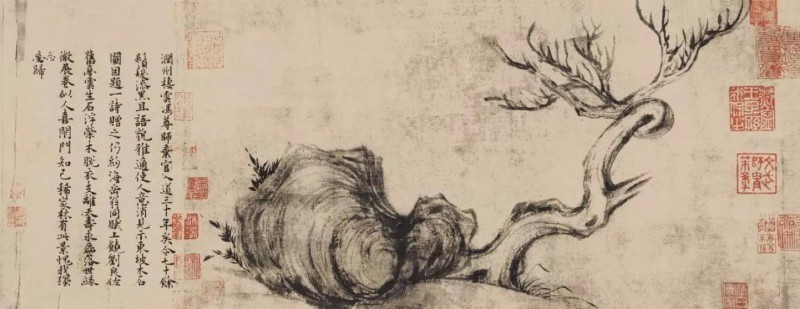
As Su Shi’s political space narrowed in the later part of his life, his thought, creativity, and practical intelligence did not disappear. They became more deeply and variously expressed through everyday life and local action. Away from the centre of government, his attention expanded into literature, art, local administration, agriculture, water management, food, health cultivation, natural observation, and regional customs.
He studied cultivation, contributed to hydraulic and public works, and attended to local livelihoods. He recorded plants and food and experimented with methods of cooking. He discussed spiritual questions with Buddhist monks and exchanged practical knowledge with local people. In this sense, Su Shi not only carried Central Plains culture into distant southern regions; through diet, self-cultivation, and ordinary practice, he also transmitted a way of living that valued the coordination of mind and body and responsiveness to nature.
These activities may appear unrelated. Together, however, they reveal the same transformation. When the space for realizing political ideals became restricted, Su Shi did not cease to create. Energy once concentrated upon the political stage was redirected and extended into a much wider world. His life itself gradually became a vessel for knowledge, experience, ideals, and creativity.
04
Reinterpreting Su Shi’s life through a system of meaning
Separated from historical situation, Su Shi’s equanimity looks like a personality trait. Separated from lived experience, it can be reduced to a general ability to accept whatever happens. Once he is returned to the structure of his time, however, we see not simply an optimistic writer but a person who lived for decades within multiple constraints and continually adapted to his environment.
The responsibilities of family tradition, the political aspirations of the literati, the tensions of Northern Song government, and repeated demotion and exile ran through much of his life. These constraints never fully disappeared. Neither did his ideals and creative force. What changed was not the underlying drive of his life but the forms through which that drive could be expressed.
When political space was restricted, his intellectual energy moved towards local governance. When official ambitions became difficult to realize, it moved towards literature, art, food, agriculture, and nature. As the external world repeatedly narrowed, his life found broader and more diverse forms of expression within the world of everyday living.
From this perspective, Su Shi’s equanimity was not a denial of constraint, nor a simple submission to fate. It resembled a new adaptive configuration formed by a complex life system under sustained pressure.
Equanimity was therefore not the beginning of Su Shi’s life story. It was a result that became visible after long adaptation. Outside its context, “broad-minded” is only an adjective. Returned to its context, it acquires a real and richly layered meaning.
Perhaps what deserves investigation is not written and historical information alone, but the deeper meanings generated through information, behaviour, and life trajectories within multiple contextual systems. Across psychological, physiological, and broader living systems, adaptation and compensation are fundamental responses to constraint. Su Shi’s life offers a concrete historical expression of this capacity.
Su Shi’s celebrated openness of spirit was not simply a fixed character trait. It gradually became a form of life, shaped through long-term system constraints and continuous adaptation. In the interaction between constraint and adaptation, the value of his life expanded beyond any single identity, position, or path.
Method & limits. This essay interprets publicly available historical, literary, and biographical materials. It does not retrospectively diagnose its subject. Analogies across biological, psychological, social, and historical systems describe comparable patterns of constraint and adaptation; they do not imply that these systems operate through identical mechanisms.
This English essay is adapted from the author’s Chinese article, first published on LinkedIn on June 12, 2026. Read the original Chinese version ↗
← BACK TO LIVES