HEALTH & MIND · PERSPECTIVES & DISCUSSIONS · 02
Chemistry and the Reward System
When Obsession Begins to Resemble Addiction
How unequal or unhealthy attraction can become a cycle of craving, checking, and reinforcement.
Some relationships begin with knowledge, trust, shared experience, and affection that develops over time. Others begin much more suddenly. A person appears, says something, looks at us in a particular way, or simply interacts with us—and the body responds before the conscious mind has formed a clear judgment. There may be pleasure, anticipation, bodily arousal, heightened attention, or an inexplicable desire to approach that person again. We usually call this chemistry.
Chemistry as a reward connection
Chemistry does not necessarily mean deep love. It may occur before we know the person well enough to love them in any durable sense. One useful neuroscience account is simpler: the brain has assigned unusually high reward value to interaction with one particular person.
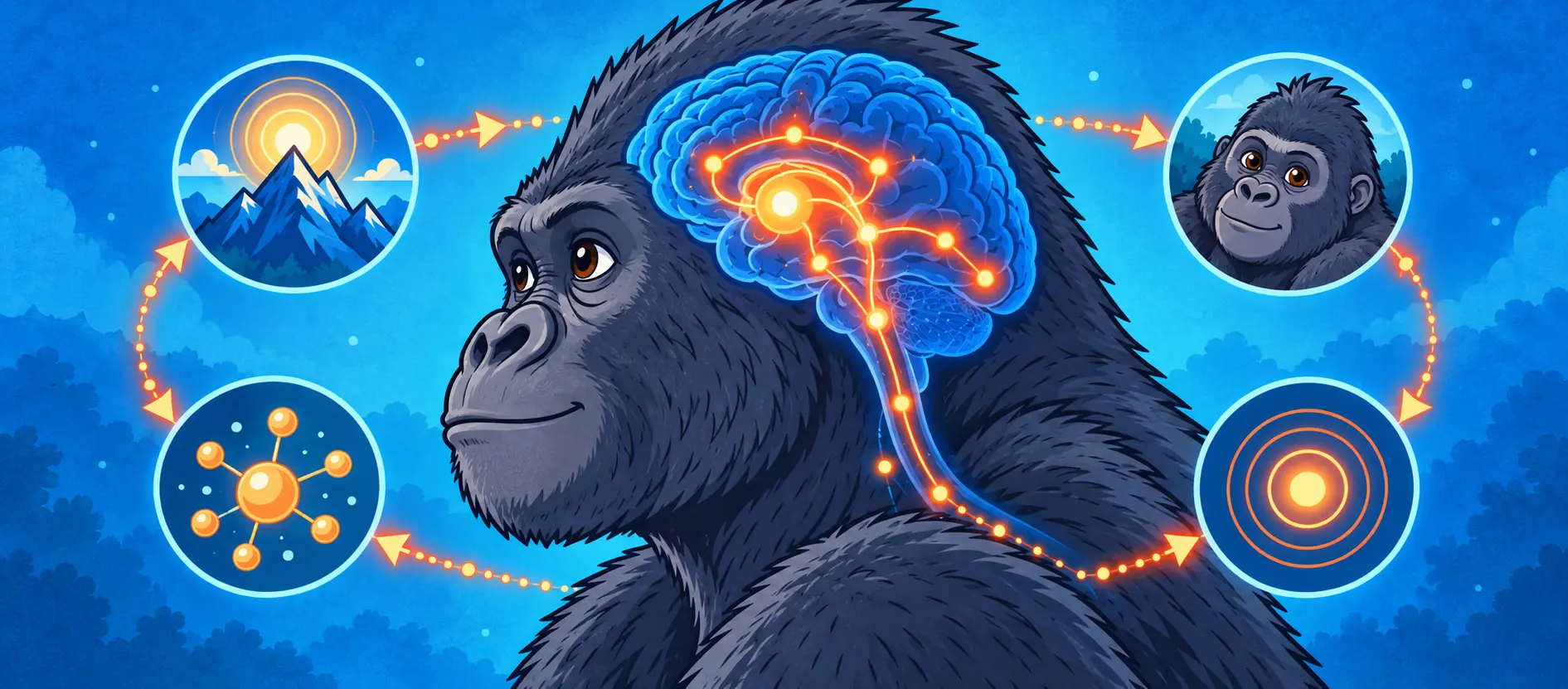
This person’s cues → reward anticipation → pleasure, attention, and approach.
The person’s face, voice, name, messages, or physical presence enter through different sensory and memory pathways. Through association, however, these cues can begin to evoke a similar expectation: something rewarding may happen when this person responds to me.
This is not proof that the brain grows a single new anatomical “wire” devoted to that person. The more defensible claim is that distributed networks for person recognition, memory, salience, valuation, bodily arousal, and approach become more likely to activate together. The relationship is stored in altered patterns of connectivity, excitability, and learned prediction—not as a sentence in the brain, but as a pathway that becomes easier to run.
Reward is also not identical to pleasure. Neuroscience distinguishes, imperfectly but usefully, between liking and wanting. A cue can become intensely motivating even when the pleasure it delivers is brief, inconsistent, or diminishing. That distinction becomes important when attraction turns obsessive.
When attraction is unequal
Chemistry itself is not pathology. The difficulty begins when the reward value assigned by one person is not matched by the other person’s availability, interest, or willingness to enter the relationship. The internal response says, “This matters enormously,” while external reality says, “This may not be available.”
Asymmetry alone does not create an addiction-like loop. A clear answer may be painful yet psychologically simpler than an unstable answer. The loop is more likely to persist when possibility remains open, responses vary, contact is unavoidable, or the person continues to search for information that might reverse the outcome.
Checking then becomes part of the reward system: Did they answer? What did that expression mean? Are they warmer today? Why did they not reply? A positive signal can briefly reward the checking. A negative or absent signal can increase distress, and checking again may briefly reduce that distress. The behaviour is therefore reinforced both by occasional reward and by temporary relief.
THE CRITICAL SHIFT
The other person is no longer only desired as a person. Their response begins to regulate hope, anxiety, self-worth, or emotional equilibrium.
The mechanism chain
The figure below is a conceptual synthesis, not a claim that every attraction follows the same sequence. It shows how a simple reward connection can become self-maintaining when attraction is unequal or unhealthy.
SUPPORTING DOWNLOAD
Mechanism Evidence Chain
Review the landscape mechanism map, supporting research, inference boundaries, and full references behind each step.
Why compare it with addiction?
The comparison is functional, not diagnostic. Romantic attraction is a normal human capacity, whereas addiction is a clinical and behavioural condition involving impaired control, persistence despite harm, and—in many cases—physiological adaptation. They should not be collapsed into the same category.
Yet an unhealthy reward loop can begin to resemble addiction in several respects: one cue becomes disproportionately salient; wanting intensifies; repeated seeking continues despite little durable satisfaction; alternative sources of reward lose priority; and the person experiences reduced freedom to redirect attention or behaviour.
The comparison becomes stronger when the environment cannot be cleanly escaped. If the person must be seen every day, they become part of the reward environment. Each encounter can reactivate prediction. If responses fluctuate, new information remains available for interpretation. The problem is then no longer simply “having feelings”; it is repeated exposure combined with behaviours that keep feeding the prediction loop.
Still, uncertainty must be described carefully. Variable reinforcement is a well-established learning principle, but applying laboratory schedules directly to human romantic relationships is an inference. Human responses also involve attachment, memory, identity, culture, power, and conscious meaning. The framework is useful precisely when these boundaries remain visible.
How to interrupt the reward loop
Recovery is not achieved by proving the original feeling was false. A feeling can be real while the relationship it predicts is unavailable, unequal, or damaging. The task is to stop repeatedly converting that feeling into reward-seeking behaviour.
Two different routes can interrupt repetition
Clear rejection—accepted as final
A clear refusal can reduce the prediction that reward remains obtainable, but only when it is accepted rather than repeatedly reopened through interpretation, bargaining, or new tests.
Full environmental exit
Leaving the shared environment, or substantially reducing cues and contact, can reduce reactivation even when explicit closure never arrives.
These are alternatives, not two conditions that must occur together. Sometimes the person cannot leave the environment. Sometimes the other person never supplies a clean answer. In those cases, behavioural boundaries matter even more.
Surrender is not passivity
In this context, surrender means relinquishing the attempt to control the other person’s response and the outcome of the relationship. It is not a direct neural mechanism, and it does not require denying desire. It is a psychological stance that makes behavioural interruption possible.
One can stop initiating unnecessary contact, checking messages, reading meaning into small changes, arranging accidental encounters, or using one more observation to reduce uncertainty. At first, this can feel worse. The brain’s prediction remains active while the familiar action that produced reward or relief is withheld. Discomfort does not mean the boundary is failing; it may be the moment in which the old prediction is no longer being confirmed.
What replaces the loop?
Extinction is not erasure. Old learning may return under stress or renewed exposure. More durable change comes from new learning: the cue can occur without checking; uncertainty can be tolerated without action; emotional regulation can happen without the other person’s response; and reward can be redistributed across friendship, work, movement, creativity, nature, faith, rest, and other meaningful relationships.
- Name the actual reward. Is it pleasure, hope, reassurance, relief from loneliness, validation, or the feeling of being chosen?
- Separate feeling from action. Attraction can be present without requiring contact, checking, or interpretation.
- Reduce reinforcement. Remove avoidable cues and stop the small behaviours that briefly reward or relieve the craving.
- Allow the prediction to go unanswered. The nervous system needs opportunities to learn that uncertainty can pass without a response.
- Restore alternative rewards. Recovery requires more than subtraction; it requires a broader life in which value and regulation are no longer concentrated in one person.
Evidence, inference, and scientific limits
This framework joins several evidence bases rather than claiming that one experiment has demonstrated the entire chain in human romantic obsession. Neuroimaging research supports the involvement of reward and motivation systems in intense romantic love. Incentive-salience theory explains how “wanting” can become disproportionate to “liking.” Learning research supports cue-triggered prediction, reinforcement, and the formation of new inhibitory learning. Addiction science supports the importance of environment, alternative reinforcement, and repeated cue exposure.
The application of these principles to a particular unequal relationship remains a conceptual interpretation. Chemistry cannot be reduced to dopamine, and no scan can tell whether a relationship is healthy. Asymmetry does not automatically produce obsession; daily contact does not inevitably create addiction; and “surrender” should not be presented as a biological cure. The claim is narrower: when person-related cues, reward prediction, uncertainty, checking, and emotional relief form a self-reinforcing loop, addiction research offers a useful comparison and a practical vocabulary for interruption.
Chemistry may begin as a rapid reward connection. Obsession begins when the person’s response becomes a repeatedly pursued source of reward or relief. Recovery begins when the feeling is allowed to exist without continually feeding the loop—and when control over the outcome is surrendered so that awareness and choice can return.
DIGITAL AMPLIFICATION
When an unequal or uncertain attraction becomes entangled with remote communication and digital algorithms, the loop can grow more complex. Messages, online-status indicators, recommendations, notifications, and repeated digital traces can keep cues available even when the person is physically absent. Without conscious awareness, occasional checking may gradually become a compulsive pattern. Explore the Digital Mindfulness programme →